
Tess Against Social Judgment
Tess of the d'UrbervillesThis flow traces the conflict between Tess’s lived experience and a society that converts sexual violence and poverty into moral blame.
increasing Bearing strength in each event
 decreasing
Bearing strength in each eventdecreasingA Warning Without Protection

A Warning Without Protection
Knowledge withheld
Joan does not explain the danger of Alec’s attention, fearing that Tess might lose a promising opportunity. Tess herself lacks the worldly experience and literary education that might help her identify his tactics.
Responsibility misplaced
When harm follows, Tess asks why no one warned her. The episode reveals a culture that expects young women to defend themselves while failing to equip or protect them.
Village Gossip
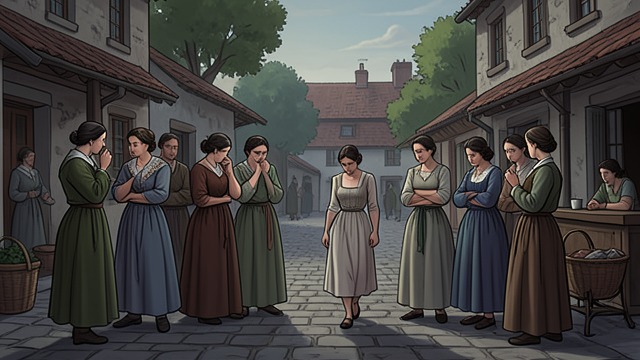
Village Gossip
Public curiosity
Former schoolmates visit Tess partly because they imagine her to have won a wealthy suitor. Their interest is shaped by rumor and fascination with her supposed sexual conquest.
Reputation becomes punishment
Tess is watched in church and avoided in public, although the surrounding society knows neither the full facts nor the coercion involved. The pressure of being discussed makes her feel more guilty than her own conscience requires.
The Unbaptized Grave

The Unbaptized Grave
A child judged through his mother
Sorrow’s birth outside marriage leads to restrictions on his church burial. The official decision treats social status as a spiritual problem even after Tess has baptized him in an emergency.
Private dignity against public rule
Tess’s flowers and handmade cross resist that judgment. Her grief makes the institution’s exclusion feel especially stark and personal.
The Worker’s Exposure
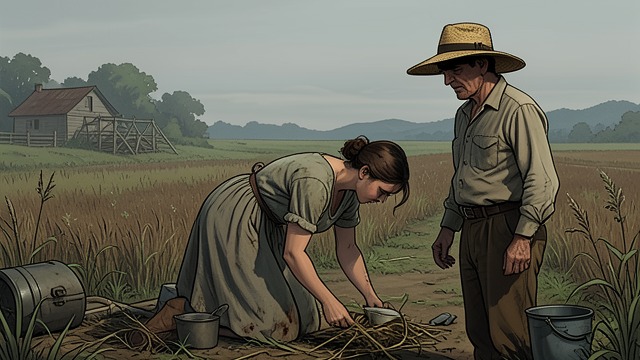
The Worker’s Exposure
Economic coercion
Tess accepts work that is physically punishing because she has few alternatives. Farmer Groby uses his authority to criticize her pace and make the job harder after she rejects Alec’s advances.
No safe category
Tess is vulnerable both as a woman and as a poor worker. Refusing sexual attention does not free her from the economic power of men who control employment and shelter.
The Family’s Expulsion
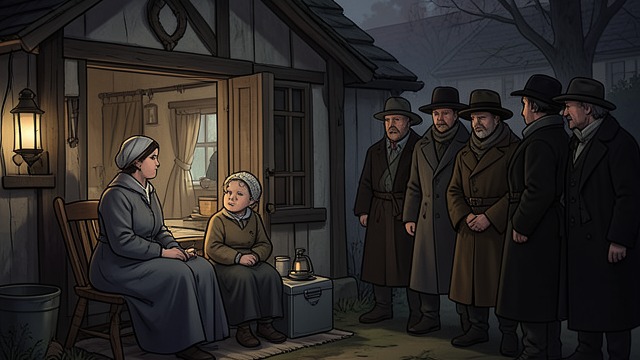
The Family’s Expulsion
Stigma joins economic demand
The Durbeyfields lose their cottage as the lease ends, and their family reputation makes their departure easier to justify. The village presents removal as both an ordinary housing change and a moral correction.
Consequences fall on dependents
Joan and the younger children suffer alongside Tess, whose personal history has become a burden shared by the household. The episode shows how social judgment can spread beyond its target.
before Tess leaves Marlott for Trantridge
the weeks after Tess returns to Marlott
the night Sorrow is buried
the winter at Flintcomb-Ash Farm
Old Lady-Day, after John’s death
